

What is Black August in the Pivotal Years 2025 and 2026
This August will mark the second annual black August commemoration by the Akata-Tribune and the Shreveport Press, Educational and Arts Collective. According to all of the research we could do, the black August commemoration of 2025 marks the first time the tradition has been truly brought to the Shreveport-Bossier area without its politics being bastardized. Black August is about fighting state suppression, fighting for political prisoners, commemorating martyrs, and building both community and personal strength. During black August, participants educate themselves on the black historical struggle for self-determination, organizations currently in the struggle, and those incarcerated/killed in the struggle.
Black August is not a celebration; it isn’t another Black History Month, nor can it ever be. Black August is a reminder of our status as an internal colony. Our colonization began right after the American Civil War, when the black population’s overall status transitioned from chattel slavery- the inherited status as the private and personal property of a slave owner- to a subjugated national group regulated to the lowest levels of the American national economy. The struggle of the black population since 1865 has been one for self-determination within the American empire; the goal of the revolutionary black nationalist is the establishment of the Black nation as a sovereign entity. That struggle reached an inflection point in the 1960s and 70s when the Black Power movement emerged from the failures of the Civil Rights movement, leading to formations such as; the Black Panther Party for self-defence, the Black Liberation Army, the Republic of New Afrika, MOVE, RAM, and others.
The Civil Rights movement managed to integrate sections of the black middle class and upper classes into the growing American empire (now an ailing global hegemon); however, the black working class/lower class were still kept in the same conditions as under segregation/apartheid. The black power movement grew out of the shortcomings of the Civil Rights movement to address the conditions of the black majority. Integration and incrementalism was the governments response to the Civil Rights movement; suppression, cooptation (under Nixon) and death was the government’s response to the Black Power movement. One fallen soldier of the war waged in the 1970’s was Field Marshal George Jackson of the Black Panther Party, his brother Johnathan Jackson, and three other of his comrades in arms.
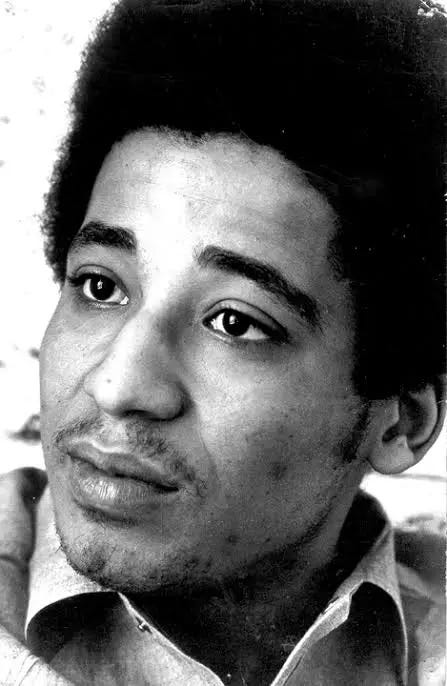
Ultimately, the war of the 1970s and 1980s was lost, at least for a little while. Mass incarceration, drug propagation, and community destruction gripped the black population in the 80s up to today. Starting in the 1970’s but achieving pace in the 1980s and 1990s, there was a conscious effort on the part of the Federal government to make black organizing increasingly difficult through spatial deconcentration; the shipping of large portions of the black population to the suburbs. During that time, the black upper-middle and upper class did quite well in American politics, seizing a niche within the Democratic Party and eventually seizing the presidency in 2008 with the election of Barack Obama. That period of relative tranquility for the black bourgeoisie (upper class), petit-bourgeoisie and professional class (upper middle class) is coming to an end.
The Transition Period: Destruction of the Black Misleadership Class
The Second Trump administration marks an inflection point in American politics. The white nationalist government in Washington has placed the black population under a tightening state of siege. Since September of 2025, federal troops have occupied Memphis with the intention of humiliating the city’s black population, overflowing its prisons and already strained court system. This siege crosses class boundaries, with both the black misleadership class and the black working class being impacted by the escalating Republican terror campaign.
New Orleans has also been under federal occupation, with 350 National Guard troops stationed in the majority-Black city since December 30th, coinciding with operation “Swamp Sweep,” a surge of ICE and Border Patrol agents to New Orleans to terrorize migrant communities. This terror campaign against Black Louisiana and migrant communities is done under the co-direction of the white nationalist governor Jeff Landry. Jeff Landry has been very aggressive in the destruction of black political power, as expressed in the Democratic Party. Landry and his party have pushed back the date of the primary elections when the Supreme Court overturned key portions of the Voting Rights Act, abolished the New Orleans Clerk position when black Democrat Calvin Duncan was expected to take it, and have used lawfare in his war against the black political establishment of New Orleans in the charging of Susan Hutson.
Like the black misleadership class in New Orleans, the black upper-middle class across the country has seen itself in the crosshairs of administrative purges and lawfare. Anti-discrimination measures were scrapped very early within the Trump regime, along with the criminalization of a lot of D.E.I practices. The federal government, specifically the Department of Education, has seen a marked reduction in its job force, with a 42 percent decline. Black Women in particular have accounted for 1/3rd of federal job losses in 2025. The federal government has historically been a significant tool for class mobility for the black population, but that avenue seems to be increasingly eradicated.
The goal of the Vance-Rubio-Miller-Trump regime is quite clear: the destruction of black political power (by extension, Democratic Party power) in an effort to consolidate personal power. Steven Miller, the Joseph Goebbels of the Trump regime, has openly stated his white nationalist designs on the American population with emails frequently in reference to “demographic displacement” and has been a personal champion in the destruction of the black professional class. I do not believe this black misleadership class should be saved, but their energy and resources should channeled into building alternative institution and uplifting the subjegated black nation, not simply “getting theirs”. In reaction to their destruction, the black professional and misleadership classes yearn for the Obama period, but that period was only good for a few well-to-do black professionals. We should not let the hell that we are entering into have us to forget the hell of the past 50 years. A new black politics, one that leads us out of the ailing U.S empire, is needed. We need an exodus from the regime of Pharoh, not an alternative arrangement under his rule.
What is to be done: Black August 2026
All members of the subjugated black nation and persons of consciousness should use black August to reconnect with the struggle of the 1970s. The crisis period that we are in has roots in the victory of reactionary forces of the 1970s and the collaboration of the black-misleadership class in the sheep-dogging of the black population into a neo-colonial political arrangement. As “respectable” avenues for black political power wane, alternative institutions and political arrangements will have to be formed. Organizing outside of electoral politics, building strong communities, and building black political consciousness should be things planned during this month. Reengaging with the politics of the 70s and morphing them to fit our current material reality is the goal of the Akata-Tribune this Black August and should be the goal of all participants.